
video history
The beginning of an adventure
In the middle of 1700, the family name Cerruti appears in the communal lists under the heading “Arti et Negotij”, a term used in those days for somebody who manufactures cloths or has cloths manufactured. From the end of 1700 to 1881 various generations of the family have worked both as self-employed, as well as skilled, expert weavers in various factories in the area, accumulating the cultural and economic capital necessary to give life to one of the most extraordinary business and personal adventures of modern times.Foundation and start of the activity
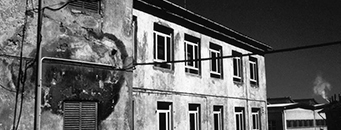
Antonio Cerruti together with two brothers and a cousin found the company, buying the mill and giving rise to the activity on the banks of the river Cervo where the company is still situated. Following a vocation still pursued today, they turn to serious production of innovative and quality textiles, enjoying the first significant successes within a few years. Soon, in fact, the factory is enlarged and more modern spinning and weaving machinery is put into action in the large rooms already lit by electric light, a rare event in those days. Annual production, which in the first years of 1900 was equal to 10.000 pieces of fine combed textile, continues to increase at a constant rhythm and is partly destined for foreign markets, in particular America. During the First World War, the efficiency of the plant guarantees ample production in the supply of grey - green cloth; in 1917 alone the Lanificio Cerruti produces 170,000 metres of it for the army.Foreign markets and modernization
Silvio Cerruti, Antonio Cerruti’s son, manages the company together with his uncle Quintino, concerning himself personally with the quality and development of the collections. There follows a phase of consolidation of the prestigious positions gained on the markets, in particular those in South America and the Middle East, while the work of modernizing the spinning, weaving and dyeing plants continues. In 1945, about 700 employees work at the Lanificio Cerruti with 140 looms and about 7100 spinning spindles, an extremely significant number if compared with those of other factories operating in the region in this period. In the same year Silvio Cerruti is appointed President of the Association of the Italian Wool Industry and succeeds in resolving, in a few months, the problem of determining the greasy wool quota to be assigned to the various companies, stimulating the upturn of the wool sector. Besides declaring the intention of producing only the highest quality textiles he dedicates himself to a radical restructuring of the strategic production divisions.Nino Cerruti and men’s fashion
After the premature death of Silvio Cerruti in 1951, the eldest son Nino takes over as head of the company . Although he is only 20 at the time, he immediately demonstrates a unique aesthetic sensitivity and organizational ability, which go on to make him a fashion icon. In 1957 the designer decides to enter the world of men’s fashion and founds HITMAN, a company specializing in the production of men’s clothing. With a staff of 350 employees Hitman produces 120,000 garments a year in close collaboration with another 10 Italian companies. In the Sixties more than 50% of production is destined for the foreign market.Cerruti 1881 and the boutiques
Hitman launches Flying Cross, the first tailored luxury men’s prêt-à-porter, which originates from an idea by the tailor and designer Osvaldo Testa. It concerns a brand which is initially trendier, which in time develops a characteristic ‘Anglo-Neapolitan’ style, combining traditional Neapolitan tailoring with Anglo-Saxon taste in textiles. In 1967 Nino Cerruti inaugurates his ‘maison de couture’: he is the first designer to launch in Paris his own label of men’s high quality prêt-à-porter. In this way Cerruti 1881 comes into being, alongside the single label boutique in Place de la Madeleine. It is the first pret-à-porter boutique where men’s and ladies’ collections are displayed side by side . Vico Magistretti, world famous architect, studies an environment of an entirely new concept for the occasion in which the furnishings are completely composed of modules and arranged according to different requirements. In 1968 Nino Cerruti has his first fashion show . It is the first time in fashion that the male and female models walk the catwalk with the same clothes. Nino Cerruti becomes famous as the creator of “Casual Chic”, a luxurious, glamorous look which conquers the world and the market with a unique, thrilling style.CINEMA AND SPORT
Nino Cerruti is the unrestrainable creative artist who will suggest a new course for fashion with his innovative solutions.Not only fashion
Nino Cerruti gives up the fashion division and devotes himself entirely to the Woollen Mill, his great passion. In 2005 he enters the field of interior design and acquires Baleri-Italia, a company leader in the sector. In the same year he is member of the jury of the Berlin Film Festival. Before him, only two other Italians had been given this role in the history of the prestigious gathering.